Showing posts with label ship registry. Show all posts

10.11.12

Moldova Ship Registry: new restrictions eyed

Begonia


Presently more than 400 merchant vessels are registered under Moldova flag. The Prime Minister of Moldova requested organizations to audit the existing fleet, three auditing companies from  Greece, Panama and the UK are to be employed for the task.   Moldova government is considering a new law regulating the Moldova Flag Registry, all the new applicants are to be approved by Ministry of Foreign Affairs. The Moldova flag is a known and popular flag of convenience.

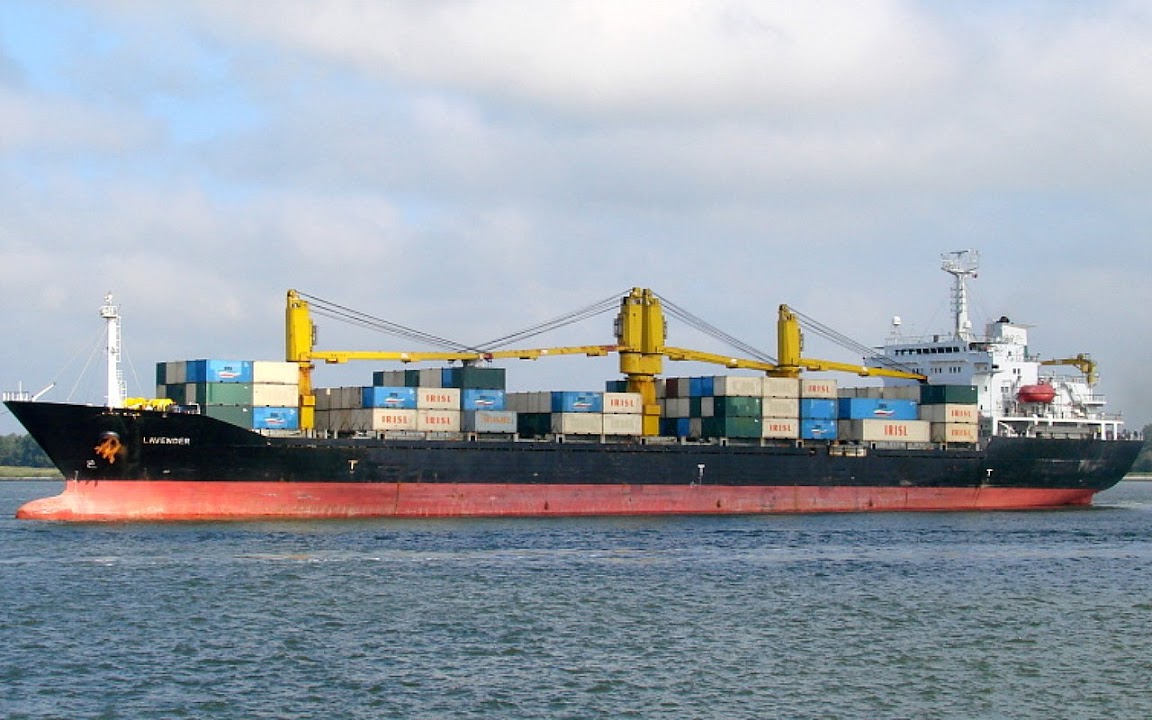
 Begonia, which is managed by Tehran-based Soroush Sarzamin Ship Management Co., received a Moldovan flag in June. The Begonia has changed names and flags three times in four years,
BEGONIA (f.k.a. IRAN PRETTY SEA (KHUZESTAN); f.k.a. LAVENDER; f.k.a. PRETTY SEA) General Cargo 23,116DWT 16,694GRT Barbados flag (IRISL); Vessel Registration Identification IMO 9167277 (Barbados) (vessel) [NPWMD]. -to- BEGONIA (f.k.a. IRAN PRETTY SEA (KHUZESTAN); f.k.a. LAVENDER; f.k.a. PRETTY SEA) General Cargo 23,116DWT 16,694GRT Moldova flag (IRISL); Vessel Registration Identification IMO 9167277 (Moldova) (vessel) [NPWMD].

16.5.09

Mitsui OSK Marshall Islands-flag


THE Marshall Islands Registry expects to have 3m gt of Japanese-owned tonnage by the end of the year through business won from Mitsui OSK Lines.
Japanese shipowners have committed 35 vessels totaling 1.5 million gross tons to the Marshall Islands flag in 2009. In total, Asian shipowners will contribute some 2.8 million gross tons in 2009 with 750,000 gross tons from Korea and 500,000 gross tons from China.

The Marshall Islands fleet has grown by 30 percent a year, on average, for the last five years and has been the world s fourth largest registry since 2005. As of 30 April 2009, the Marshall Islands fleet comprised more than 2000 vessels at 49.2 million gross tons and is expected to surpass the 50 million gross ton mark by year s end.

Mitsui OSK Line (MOL) became the first major shipowner in Japan, in '06, to register a vessel with the Marshall Islands Maritime Registry. Vessel was the Opal Express, a 28,850gt product tanker newbuilding from the Iwagi Zosen shipyard in Japan.

8.10.08

Neustrashimy carrying marines and special forces


Headed to the waters off Somalia, where pirates are holding the MV Faina, a Russian warship, the frigate Neustrashimy, is carrying marines and special forces.

2.10.08

Tanks aboard Faina destined for South Sudan

Authorities in Kenya have charged a maritime official who said that the battle tanks aboard Belize-flag MV Faina were destined for southern Sudan, rather than Kenya.

Andrew Mwangura - the spokesman for the Kenyan chapter of the Seafarers Assistance Programme - was charged on Thursday with making alarming statements.

Mr Mwangura was also accused of illegal possession of drugs. He denies both charges.

Police want to hold Mr Mwangura for five days, saying he has vital information they want to question him about.

The claim that the tanks on board the Ukrainian ship were going to South Sudan has been strongly denied by Kenyan and Ukrainian authorities.

The tanks on board the ship were bound for the autonomous government of South Sudan, it is understood, in possible contravention of a peace accord.

8.2.08

Al Hamed was nothing—in rotten shape


But there is evidence that the Al Hamed could not have been carrying sensitive cargo—or any cargo—from North Korea. International shipping is carefully monitored by Lloyd’s Marine Intelligence Unit, which relies on a network of agents as well as on port logs and other records. In addition, most merchant ships are now required to operate a transponder device called an A.I.S., for automatic identification system. This device, which was on board the Al Hamed, works in a manner similar to a transponder on a commercial aircraft—beaming a constant, very high-frequency position report. (The U.S. Navy monitors international sea traffic with the aid of dedicated satellites, at a secret facility in suburban Washington.)

According to Marine Intelligence Unit records, the Al Hamed, which was built in 1965, had been operating for years in the eastern Mediterranean and the Black Sea, with no indication of any recent visits to North Korea. The records show that the Al Hamed arrived at Tartus on September 3rd—the ship’s fifth visit to Syria in five months. (It was one of eight ships that arrived that day; although it is possible that one of the others was carrying illicit materials, only the Al Hamed has been named in the media.) The ship’s registry was constantly changing. The Al Hamed flew the South Korean flag before switching to North Korea in November of 2005, and then to Comoros. (Ships often fly flags of convenience, registering with different countries, in many cases to avoid taxes or onerous regulations.) At the time of the bombing, according to Lloyd’s, it was flying a Comoran flag and was owned by four Syrian nationals. In earlier years, under other owners, the ship seems to have operated under Russian, Estonian, Turkish, and Honduran flags. Lloyd’s records show that the ship had apparently not passed through the Suez Canal—the main route from the Mediterranean to the Far East—since at least 1998.
Among the groups that keep track of international shipping is Greenpeace. Martini Gotjé, who monitors illegal fishing for the organization and was among the first to raise questions about the Al Hamed, told me, “I’ve been at sea for forty-one years, and I can tell you, as a captain, that the Al Hamed was nothing—in rotten shape. You wouldn’t be able to load heavy cargo on it, as the floorboards wouldn’t be that strong.” here

21.9.07

North Korean ship discharged at the Syrian port of Tartus


The Israeli attack came just three days after a North Korean ship docked at the Syrian port of Tartus, carrying a cargo that was officially listed as cement.

The ship's role remains obscure. Israeli sources have suggested it carried nuclear equipment. Others have maintained that it contained only missile parts, and some have said the ship's arrival and the attack are merely coincidental. One source suggested that Israel's attack was prompted by a fear of media leaks on intelligence indicating that North Korean nuclear personnel were in Syria. here

16.7.07

No. 9 Han Chang ends nuclear confrontation


North Korea told the United States July 14 that it had shut down its nuclear reactor at Yongbyon and readmitted a permanent international inspection team, completing its first step toward reversing a four-year-long confrontation with the United States. Rice and Mr. Hill worked around Mr. Cheney to strike the deal, which awarded the North large shipments of oil as it took the first steps to end its nuclear production capacity.

The United States also cleared the way for the return of $25 million frozen in a Macao bank that the administration had said was largely North Korea’s ill-gotten gains from counterfeiting and arms sales. A South Korean ship, No. 9 Han Chang loaded with 6,200 tons of heavy fuel oil arrived at Sonbong, a port in northeastern North Korea, on July 14,

9.2.07

Sihanoukville call by USS Gary


A U.S. navy warship docked at Cambodia's main seaport Friday, the first port call by an American naval vessel to the Southeast Asian nation in more than three decades.

The USS Gary, a guided missile frigate with 200 officers and crew, was greeted by a team of Cambodian naval officers and U.S. Embassy staff at Sihanoukville, 115 miles southwest of the capital, Phnom Penh. here

20.10.06

North Korean Ships Dropping Cambodian Flag

North Korean freighter Sosan
Dozens of North Korean ships used to carry the Cambodian flag.
North Korea adroitly uses flags of convenience to camouflage the movement of its cargo vessels as they engage in tasks that sometimes violate international laws.
Times