2.6.15

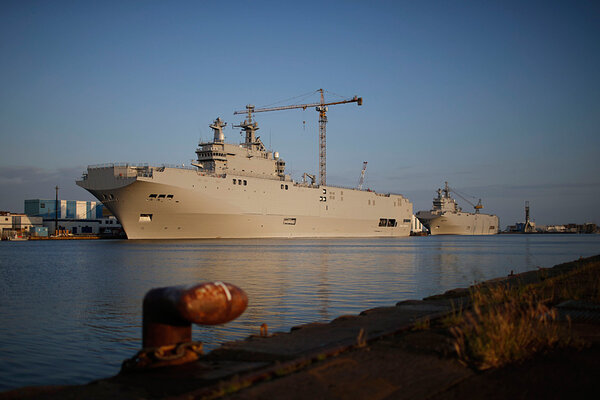
Mistral: anybody want a LHA?


France may sell the Mistrals,  two helicopter carriers built for Russia, to another country. Canada and Singapore have been mooted, as has Egypt which has just bought French fighter jets and naval frigates.
Russia says they cannot be sold on because the carriers were built to specific Russian navy requirements and therefore it was a "matter of state security."   At present the delivery of the ships remains indefinitely suspended rather than formally canceled, part of the sanctions for the seizure of Crimea from Ukraine.   France currently operates 3 Mistral Class LHDs, after buying a 3rd using economic stimulus funds. Unlike other LHD designs, the Mistral Class can’t operate fixed wing aircraft, and some classify it as an LHA.

[February 7 French sale to Moscow of two "Mistral" class warships:conditions "aren't right"]
French officials announced February 4 that France would not deliver the Mistral-class ship, part of a $1.7 billion weapons deal, saying that the conditions "aren't right," despite a possible cease-fire in Ukraine.


[July 30 2014 EU sanctions to allow French sale to Moscow of two "Mistral" class warships]

Majed and Randy
In a rare five-way teleconference on Monday evening, the leaders of Germany, France, Britain, Italy and the US discussed some key principles, such as only targeting future contracts. This would allow existing deals, like the French sale to Moscow of two "Mistral" class warships or the hundreds of existing British delivery permits, to go ahead.   
 Japan’s Defense Minister Itsunori Onodera met with his French counterpart Jean-Yves Le Drian in Tokyo and “expressed strong concern” about France’s continued plan to sell helicopter carriers to Russia, given the potential impact it could have on East Asian security. Onodera used almost uncharacteristically strong language, saying “‘Strong concern’, in a sense, means we want them to stop the deal,” and that “the world is highly concerned about Ukraine and we are worried about the recent military buildup in Russia’s Far East. If the ship is deployed to its namesake, that would be something that makes the whole world concerned.”
Onodera is concerned about the helicopter carrier being “deployed to its namesake” in Vladivostok. Japan is also possibly worried about a strategic shift on the part of Russia to East Asia. This type of hardware in the eastern theater would at least indicate a shift in Russian tactical capability, as well as signal its intent to focus on East Asia, where it finds itself less encumbered by hostile neighbors and more readily able to do business with countries like North Korea, which is looking to balance against its over dependence on China, or China, which has no strategic interest in seeing the U.S. emboldened in East Asia by an isolated Russia. While both Japan and the U.S. have substantial military assets, a strategic shift east by Russia could potentially change the regional power balance, especially if ties with China continue to warm.
Details of further European sanctions were scheduled to be published in full on Wednesday. 


[ July 25 EU drafting stepped up sanctions against defense trade]
European Union ambassadors reached a preliminary deal July 25 on stepped-up sanctions against Russia,trade in the defense sector, dual-use goods and sensitive technologies.

earlier:
Official Journal of the European Union

L 183/9

COUNCIL REGULATION (EU) No 692/2014

of 23 June 2014

concerning restrictions on the import into the Union of goods originating in Crimea or Sevastopol, in response to the illegal annexation of Crimea and Sevastopol

THE COUNCIL OF THE EUROPEAN UNION,
Having regard to the Treaty on the Functioning of the European Union, and in particular Article 215 thereof,
Having regard to Council Decision 2014/386/CFSP (1) concerning restrictions on goods originating in Crimea or Sevastopol, in response to the illegal annexation of Crimea and Sevastopol,
Having regard to the joint proposal of the High Representative of the Union for Foreign Affairs and Security Policy and of the European Commission,
Whereas:
(1)
At its meeting of 20-21 March 2014, the European Council strongly condemned the annexation of the Autonomous Republic of Crimea (‘Crimea’) and the city of Sevastopol (‘Sevastopol’) to the Russian Federation and emphasised that it will not recognise the annexation. The European Council asked the Commission to evaluate the legal consequences of that annexation and to propose economic, trade and financial restrictions regarding Crimea for rapid implementation.
(2)
In its Resolution of 27 March 2014, the United Nations General Assembly affirmed its commitment to the sovereignty, political independence, unity and territorial integrity of Ukraine within its internationally recognized borders, underscoring the invalidity of the referendum held in Crimea on 16 March, and called upon all States not to recognise any alterations in the status of Crimea and of Sevastopol.
(3)
On 23 June 2014, the Council adopted Decision 2014/386/CFSP concerning restrictions on goods originating in Crimea or Sevastopol and on the provision, directly or indirectly, of financing or financial assistance, as well as insurance and reinsurance, related to the import of such goods, in response to the illegal annexation of Crimea and Sevastopol. In order to minimise the effect of such restrictive measures on economic operators, exceptions and transitional periods should be provided for in respect of trade in goods and related services for which transactions are required by a trade contract or ancillary contract, subject to a notification procedure.
(4)
These measures fall within the scope of the Treaty on the Functioning of the European Union and, therefore, notably with a view to ensuring their uniform application in all Member States, regulatory action at the level of the Union is necessary in order to implement them.
(5)
In order to ensure that the measures provided for in this Regulation are effective, it should enter into force on the day following that of its publication,
HAS ADOPTED THIS REGULATION:
Article 1

For the purposes of this Regulation, the following definitions apply:
(a)
‘claim’ means any claim, whether asserted by legal proceedings or not, made before or after 25 June 2014, under or in connection with a contract or transaction, and includes in particular:
(i)
a claim for performance of any obligation arising under or in connection with a contract or transaction;
(ii)
a claim for extension or payment of a bond, financial guarantee or indemnity of whatever form;
(iii)
a claim for compensation in respect of a contract or transaction;
(iv)
a counterclaim;
(v)
a claim for the recognition or enforcement, including by the procedure of exequatur, of a judgment, an arbitration award or an equivalent decision, wherever made or given;
(b)
‘contract or transaction’ means any transaction of whatever form, whatever the applicable law, and whether comprising one or more contracts or similar obligations made between the same or different parties; for this purpose ‘contract’ includes a bond, guarantee or indemnity, particularly a financial guarantee or financial indemnity, and credit, whether legally independent or not, as well as any related provision arising under, or in connection with, the transaction;
(c)
‘goods originating in Crimea or Sevastopol’ means goods which are wholly obtained in Crimea or in Sevastopol or which have undergone their last substantial transformation there, in accordance, mutatis mutandis, with Articles 23 and 24 of Regulation (EEC) No 2913/92 of 12 October 1992 establishing the Community Customs Code (2);
(d)
‘territory of the Union’ means the territories of the Member States to which the Treaty is applicable, under the conditions laid down in the Treaty, including their airspace.
(e)
‘competent authorities’ means the competent authorities of the Member States as identified on the websites listed in the Annex.
Article 2

It shall be prohibited:
(a)
to import into the European Union goods originating in Crimea or Sevastopol;
(b)
to provide, directly or indirectly, financing or financial assistance as well as insurance and reinsurance related to the import of the goods referred to in point (a).
Article 3

The prohibitions in Article 2 shall not apply in respect of:
(a)
the execution until 26 September 2014, of trade contracts concluded before 25 June 2014, or of ancillary contracts necessary for the execution of such contracts, provided that the natural or legal persons, entity or body seeking to perform the contract have notified, at least 10 working days in advance, the activity or transaction to the competent authority of the Member State in which they are established.
(b)
goods originating in Crimea or Sevastopol which have been made available to the Ukrainian authorities for examination, for which compliance with the conditions conferring entitlement to preferential origin has been verified in accordance with Regulation (EU) No 978/2012 and Regulation (EU) No 374/2014 (3) or in accordance with the EU-Ukraine Association Agreement.
Article 4

It shall be prohibited to participate, knowingly and intentionally, in activities the object or effect of which is to circumvent the prohibitions laid down in Article 2.
Article 5

Actions by natural or legal persons, entities or bodies shall not give rise to any liability of any kind on their part if they did not know, and had no reasonable cause to suspect, that their actions would infringe the measures set out in this Regulation.
Article 6

1.   No claims in connection with any contract or transaction the performance of which has been affected, directly or indirectly, in whole or in part, by the measures imposed under this Regulation, including claims for indemnity or any other claim of this type, such as a claim for compensation or a claim under a guarantee, particularly a claim for extension or payment of a bond, guarantee or indemnity, particularly a financial guarantee or financial indemnity, of whatever form, shall be satisfied, if they are made by:
(a)
designated natural or legal persons, entities or bodies listed in Annex I to Council Regulation (EU) No 269/2014;
(b)
any natural or legal person, entity or body acting through or on behalf of one of the persons, entities or bodies referred to in point (a);
(c)
any natural or legal person, entity or body which has been found by an arbitral, judicial or administrative decision to have infringed the prohibitions set out in this Regulation;
(d)
any natural or legal person, entity or body, if the claim relates to goods the import of which is prohibited under Article 2.
2.   In any proceedings for the enforcement of a claim, the onus of proving that satisfying the claim is not prohibited by paragraph 1 shall be on the natural or legal person, entity or body seeking the enforcement of that claim.
3.   This Article is without prejudice to the right of natural or legal persons, entities or bodies referred to in paragraph 1 to judicial review of the legality of the non-performance of contractual obligations in accordance with this Regulation.
Article 7

1.   The Commission and the Member States shall inform each other of the measures taken under this Regulation and share any other relevant information at their disposal in connection with this Regulation, in particular information in respect of violation and enforcement problems and judgments handed down by national courts.
2.   The Member States shall immediately inform each other and the Commission of any other relevant information at their disposal which might affect the effective implementation of this Regulation.
Article 8

1.   Member States shall lay down the rules on penalties applicable to infringements of the provisions of this Regulation and shall take all measures necessary to ensure that they are implemented. The penalties provided for must be effective, proportionate and dissuasive.
2.   Member States shall notify the rules referred to in paragraph 1 to the Commission without delay after the entry into force of this Regulation and shall notify it of any subsequent amendment.
Article 9

1.   Member States shall designate the competent authorities referred to in this Regulation and identify them on the websites listed in the Annex. Member States shall notify the Commission of any changes in the addresses of their websites listed in the Annex.
2.   Member States shall notify the Commission of their competent authorities, including the contact details of those competent authorities, without delay after the entry into force of this Regulation, and shall notify it of any subsequent amendment.
3.   Where this Regulation sets out a requirement to notify, inform or otherwise communicate with the Commission, the address and other contact details to be used for such communication shall be those indicated in the Annex.
Article 10

This Regulation shall apply:
(a)
within the territory of the Union, including its airspace;
(b)
on board any aircraft or any vessel under the jurisdiction of a Member State;
(c)
to any person inside or outside the territory of the Union who is a national of a Member State;
(d)
to any legal person, entity or body, inside or outside the territory of the Union, which is incorporated or constituted under the law of a Member State;
(e)
to any legal person, entity or body in respect of any business done in whole or in part within the Union.
Article 11

This Regulation shall enter into force on the day following that of its publication in the Official Journal of the European Union.
This Regulation shall be binding in its entirety and directly applicable in all Member States.
Done at Luxembourg, 23 June 2014.
For the Council
The President
C. ASHTON
On 4 July 2014, the EU published an amendment, adding the wording underlined below to Article 3(b) of Regulation 692/2014, thereby clarifying the scope of this exception:

"The prohibitions…shall not apply in respect of:… goods originating in Crimea or Sevastopol which have been made available to the Ukrainian authorities for examination, for which compliance with the conditions conferring entitlement to preferential origin has been verified and for which a certificate of origin has been issued in accordance with Regulation (EU) No 978/2012 and Regulation (EU) No 374/2014 (2) or in accordance with the EU-Ukraine Association Agreement."

UKBIS has clarified that this means that goods from Crimea/ Sevastopol which are accompanied by a valid certificate of origin from a Ukrainian authority may be imported into the EU. There is no separate requirement that the goods be presented to the Ukrainian authorities for inspection.

EUR1 and GSP certificates issued by the Crimean Chamber of Commerce or its branches, or the Sevastopol Chamber of Commerce will not meet the requirements of Art 3(b).


February 3 2012

Chariot: SVG-flag arms ship heading to Levant?
Russia’s Ambassador to the United Nations Vitaly Churkin said an embargo on arms supplies to Syria is out of the question – along with any resolution that could threaten to aggravate conflict in the country.

Churkin, speaking to journalists via video link, spoke out strongly against a possible arms embargo on Syria, citing some countries' refusal to condemn the armed groups operating there, and the continued risk of weapons supplies reaching these groups despite any ban.

THE Syrian port of Tartus is Russia’s only military base outside the old Soviet Union.Russia's dilemma is that too much support for Mr Assad risks a future regime booting it out of Tartus, which is valued by Russian spooks and electronic snoopers. But too little may mean defeat for an old ally.

The Iranian embassy in Ankara denied on January 12 that four trucks seized by Turkish customs were carrying military equipment from Iran to Syria. The trucks were confiscated on January 10 in Turkey's southeast province of Kilis at the Öncüpınar border crossing into Syria.

EU legislation
In response to the violent repression by Syrian government forces, the EU orignally imposed sanctions on Syria which came into force with immediate effect on 10 May 2011. The sanctions were originally detailed in Council Decision 2011/273/CFSP (published in the Official Journal of the European Union L121, 10.4.2011, p11) and Council Regulation (EU) No 442/2011 (published in the Official Journal of the European Union, L121, 10.4.2011, p1), now repealed.

These sanctions have since been consolidated and updated by new restrictive measures announced in Council Decision 2011/782/CFSP (published in the Official Journal of the European Union L319, 2.12.2011, p56). This Decision came into force on 1 December 2011. The EU have also subsequently published implementing legislation in Council Regulation (EU) No 36/2012. This Regulation specifies items that are prohibited in relevant annexes.

The measures include an arms embargo, an asset freeze and a travel ban against specified individuals. They also include a prohibition on internet and telephone communications items and oil and gas goods and technology. Chariot earlier
back

28.5.15

Five Arab gunboats shell, sink ship at Hodeida. Houthi aligned port

Polnocny-C Indian Navy

 "Five gunboats shelled the administrative buildings of the base," the official told Reuters by telephone from Hodeida.   Arab warplanes and ships also hammered Yemen's largest military port in the Red Sea city of Hodeida at dawn May 27,."The naval base was bombed by aircraft and ships. Large parts of it were destroyed and two warships were hit, and one of them, named the Bilqis, was destroyed and sank onto its side, and five gunboats shelled the administrative buildings of the base," the official said by telephone from Hodeida.


Poland sold a medium landing craft for the Yemeni navy. It is equipped with a bow ramp that allows beach landings.   The NS-722-class landing craft is the last of four and meant to transport tanks and marines.

The first vessel, a 1,383-ton vessel called Bilqis, was built by
Poland's Naval Shipyard Gdynia. The landing craft can transport five T-72
main battle tanks and 111 combatants.  
 NS-722 class (1 built in 2002)
Displacement: 1,410 tons full load
Length: 88.7 m
Speed: 17 knots (31 km/h)
Aircraft facility: One helicopter platform
Hodeida and its military bases are aligned with the Houthis, the most powerful force in Yemen's complex conflict, which also involves southern secessionist militia, local tribal forces and Islamist militants such as Al-Qaeda's regional wing.


[May 25 MS Iran Shahed:unloaded / Undeclared voyages between Iran and Yemeni ports controlled by the Huthis ]
United Nations officials in the port of Djibouti say they have taken charge of aid cargo carried by  Iran Shahed .   The vessel  was carrying 2,500 tons of food aid for Yemen that will now be distributed by the UN World Food Program.
At least four large cargo ships made a "series of highly unusual and undeclared trips between Iran and Yemeni ports controlled by the Huthis in the first few months of the year," based on a search of maritime records.
While it is not known what cargo the Iranian ships were carrying, they "changed their ensigns, turned off their tracking devices at key points during their voyages, registered false information in international shipping logs, and met unidentified craft mid-ocean,"after the Huthi rebellion broke out in Yemen. The rebels since then have dislodged the government and taken over large swaths of the country, including the capital, Sanaa, and biggest port, Aden.

[May 17 docked at Djibouti
Just before 10 p.m. local time (8 p.m. GMT), the Iran Shahed moved into the port of Djibouti and docked. After undergoing inspection by U.N. or Red Cross officials in Djibouti, the Iran Shahed would be able to dock at a Yemeni port and deliver its aid cargo without being intercepted, stopped or boarded by Saudi or U.S. naval forces. The Saudis, for their part, will not have to choose between intercepting the vessel and maintaining the legitimacy of their naval blockade on Yemen, since the Iran Shahed will have been inspected by a neutral party.

If an official organization like the U.N or the International Committee of the Red Cross is willing to give the shipments on board the Iran Shahed the seal of approval, this will almost certainly deflate the controversy surrounding the ship. As the naval blockade continues, however, it is still unclear whether Iran will send more aid ships and whether they will also be willing to submit to inspection to avoid conflict.

[May 17  due in Hodeida May 21]
Aboard ms Iran Shahed

Tasnim, a news agency associated with Iran’s elite Revolutionary Guard reported that the vessel had left Omani waters and was in the Gulf of Aden.   The vessel’s captain, Masoud Qazi Mir-Saeed, said that if weather remained fair it should dock in rebel-controlled Hodeida on May 21
It was under escort by a frigate, the reporter said, but that vessel was a foreign ship that is part of international antipiracy efforts, the Fars news agency said.   A Pentagon spokesman had said on May 12 that the United States was tracking the Iran Shahed, after an Iranian naval commander told state media that warships might escort it to Yemen. [May 17, 2015 Updated: May 17, 2015 06:40 PM]


[May 13 ]
m.s. IRAN SHAHED
MS Iran Shahed, which Tehran says is carrying humanitarian supplies. left on May 11 for the Yemeni port Hodaida, which is held by Iran-allied Houthi fighters.

"If the Iranians follow U.N. protocol, move the ship to a port in Djibouti, allow the humanitarian cargo they claim is on the ship to be distributed through U.N. channels, then they will have done the right thing in this case," Pentagon spokesman Colonel Steve Warren said.   Iranian warships will accompany the self-discharger.

IRAN SHAHED
General Cargo  
IMO:  9184691
MMSI:  422517000
Call Sign:  9BHI
Flag:  Iran (IR)
AIS Type:  Cargo
Gross Tonnage:  2615
Deadweight:  3340 t
Length × Breadth:  92.85m × 15.85m
Year Built:  1999

[April 23 Iranian flotilla now sailing NE past Oman]

AL MUKALLA 
Iranian nine-ship convoy is south of Salalah, Oman, and now headed northeast in the Arabian Sea in the direction of home. The ships, which include seven freighters and two frigates, had sailed southwest along the coast of Yemen heading in the direction of Aden and the entrance to the Red Sea. They appeared to drop anchor in the north Arabian Sea.    Warships from Saudi Arabia and Egypt are positioned to the southwest of the convoy, forming a blockade of the Gulf of Aden and the port city of Aden.


[April 21 ]
 The Iranian ships are moving very slowly, about five knots, off the coast of Yemen.   Army Colonel Steve Warren, a Pentagon spokesman said the United States did not know what the Iranian cargo ships were carrying and declined to say whether the U.S. warships would stop and board Iranian vessels if they attempted to enter Yemeni territorial waters.   "I'm not going to telegraph anything," Warren said.
 “It is hard to believe that Mukalla could be controlled this quickly by Al Qaeda, amidst the complete absence of the security forces,” The relative ease with which the militants captured large parts of the city raised fears of a broader expansion by the Sunni extremists, who have proved adept in the past at exploiting turmoil in Yemen to capture territory.


Koosha 3  Info Received:  2015-03-09 20:50, Area:  Oman Gulf
ARDAVAN Info Received:  2015-04-20 11:15  Area:  Persian Gulf

Eight Iranian ships are heading toward Yemen and possibly carrying arms for the Houthis.   What's unusual about the new deployment is that the Iranians are not trying to conceal it.    Instead, they appear to be trying to "communicate it" to the U.S. and its allies in the Gulf.  Navy officials said there are about nine U.S. warships in the region, including cruisers and destroyers carrying teams that can board and search other vessels.   The U.S. Navy aircraft carrier USS Theodore Roosevelt was moving through the Arabian Sea off Yemen to beef up security and join other American ships that are prepared to intercept any Iranian vessels carrying weapons to the Houthi rebels fighting in Yemen.   The U.S. Navy generally conducts consensual boardings of ships.  

Alvand-class frigate


Iran's Bushehr logistic vessel and Alborz frigater, left Iran’s southern port city of Bandar Abbas on  April 8  bound for waters off Yemen.
Rear Admiral Habibollah Sayyari said tthe ships would be part of an antipiracy campaign aimed at "safeguarding naval routes for vessels in the region."
Alborz  (F-72)
Class and type: Alvand-class frigate
Displacement: 1,100 tons (1,540 tons full load)
Length: 94.5 m (310 ft)
Beam: 11.07 m (36 ft)
Draught: 3.25 m (10.5 ft)
Propulsion: 2 shafts, 2 Paxman Ventura cruising diesels, 3,800 bhp, 17 knots (31 km/h)
2 Rolls Royce Olympus TM2 boost gas turbines, 46,000 shp, 39 knots (72 km/h)
Speed: 39 knots (72 km/h) max
Range: 5,000 nmi (9,000 km) at 15 knots (28 km/h)
Complement: 125-146
Armament: 4 x C-802 anti-ship missiles
1 × 4.5 inch (114 mm) Mark 8 gun
1 x twin 35 mm AAA, 2 x single 20 mm AAA
2 × 81 mm mortars
2 × 0.50cal machine guns
1 x Limbo ASW mortar
2 x triple 12.75 in torpedo tubes

[February 8 2014 Iran's frigate Sabalan,Kharg bound for U.S. waters ]


Sabalan (in Persian سبلان) is a British-made Vosper Mark V-class (or Alvand-class) frigate in the Iranian Navy.
Commissioned in June 1972 as part of a four-ship order, 

Commander of Iran's Northern Navy Fleet Admiral Afshin Rezayee Haddad announced on January 8. The admiral, who is also the commander of the Iranian Army's 4th Naval Zone said, "Iran's military fleet is approaching the United States' maritime borders, and this move has a message."
With task of securing shipping routes as well as training new personnel, Iran's Sabalan frigate and Kharg logistic helicopter carrier left for the Atlantic Ocean from the southern Iranian port of Bandar Abbas on a three-month voyage. "The Iranian Army's naval fleets have already started their voyage towards the Atlantic Ocean via the waters near South Africa," he said. The Associated Press says Iranian officials acknowledged last month that the fleet consisted of a destroyer and a logistic helicopter carrier.   

March 04, 2013 - CHINA - The Iranian Navy’s 24th fleet of warships has docked in the Chinese port of Zhanjiang, which is located in southwest China, the deputy commander of the Navy announced on March 4, 2013.
“The (Navy’s) 24th fleet of warships, comprised of the Kharg helicopter carrier and the Islamic Republic of Iran’s Sabalan frigate docked in  Zhanjiang Port  after sailing 13,000 kilometers in 40 days,”    

On the morning of April 18, 1988, the oil platforms were knocked out. The U.S. forces then turned to look for Iranian frigates in the Strait of Hormuz,... Another group of A-6 Intruders was sent to the reported location of the Sabalan in the strait, where, the frigate fired at the A-6s at 6.17 p.m. (Gulf time). At 6.18 p.m., an A-6 dropped a Mk-82 500 pound laser-guided bomb, which left the Sabalan paralyzed and on fire. At The Pentagon, Defense Secretary Frank Carlucci, Chairman of the Joint Chiefs Adm. William J. Crowe Jr., and U.S. Central Command head Gen. George B. Crist monitored the situation. After discussion, the men decided to spare the moribund Sabalan, perhaps to prevent further escalation.
Iranian forces towed the damaged ship to the port of Bandar-Abbas, and it was eventually repaired and returned to service.   The Moudge class frigate is a modified Iranian-built version of the Alvand, with five either in service or building.

The U.S. Navy's 5th fleet is based in Bahrain — across the gulf from Iran.

[November 11, 2012]


Admiral Naghdi, DE 91


IS Kharg
Shahid, Kharg enter Mediterranean after crossing the Suez Canal on November 10

 [October 31]Two Iranian warships docked in Port Sudan have left the Sudanese port after a visit coinciding with Khartoum's denial that Iran is involved in making weapons in Sudan.   .Small Sudanese craft escorted the Kharg out of the harbour, after the departure of another Iranian warship, the corvette Admiral Naghdi. The Naghdi's crew stood in orange life jackets as the gunboat departed.

[October 29]An Iranian naval task force docked in Sudan on October 29 includes IS  Shahid Naqdi, a corvette-class vessel, and IS Kharg, a supply vessel that can carry three helicopters.   Sudan is often thought a waypoint for arms smuggled to Hamas.

[February 22,2011]After two days of violent street protests in one week, Iran's opposition Green Movement said Feb 21 it was pondering its next move and considering a continuation of street protests, according to opposition websites.
A new date hasn't been announced for antigovernment protests although supporters posted on the opposition's Facebook page that this Tuesday or Wednesday are possible.
Opposition leaders Mir Hossein Mousavi and Mehdi Karoubi have been under house arrest for over a week with little communication with the outside world.

IS Alvand, DE 71, passed through the Suez canal at Ismailia, Egypt, Tuesday, Feb.22, 2011, together with IS Kharg, replenishment ship 431.
The Iranian ships are headed for Latkia in Syria on a training mission.
The ships paid about $300,000 in fees for the passage, according to a Maritime agent.
earlier

14.5.15

mt Alpine Eternity: attacked by five IRGCN in Strait of Hormuz

Singapore-registered tanker Alpine Eternity
Five gunboats intercepted  in the Strait of Hormuz  a Singapore-flagged chemtanker, Alpine Eternity, and ordered it to halt, sending machine gun fire across the bow when it did not stop. The gunboats then fired shots directly into the ship's stern in an apparent attempt to disable the propellers, the officials said.   The Iranian vessels then called on nearby warships from the United Arab Emirates for help, but sped away when three Emerati coast guard vessels arrived.


It was not clear why the Iranian vessels attempted to stop the ship, or if any rounds of ammunition struck it. There were no U.S. citizens aboard, and although a U.S. Navy warship was 20 miles from the incident, it was not called upon to help and did not respond.
 ALPINE ETERNITY
Oil/Chemical Tanker  Oil/Chemical Tanker
IMO:  9430272
MMSI:  563944000
Call Sign:  9VGA8
Flag:  Singapore (SG)
AIS Type:  Tanker
Gross Tonnage:  29130
Deadweight:  46100 t
Length × Breadth:  183m × 32.23m

Year Built:  2009


[May 9 MV Maersk Tigris: U.S. Navy close monitoring of Hormuz ends]
U.S. Navy has stopped accompanying commercial ships through the Strait of Hormuz.   U.S. Army Col. Steve Warren said the mission's authorization "expired" at midnight in the Persian Gulf, or about 5 p.m. May 5 in Washington.
[May 7 Iran has released the cargo vessel detained by its authorities]
Iran has released a cargo vessel detained by its authorities last month, its official news agency reported. 

[May 4   “It's difficult to know exactly why the Iranians are operating this way,”
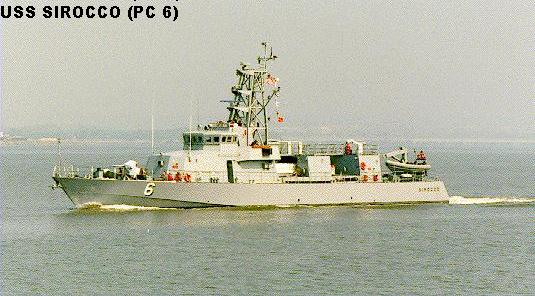
Coastal patrol ship USS Thunderbolt (PC 12) {added March 28}
“It's difficult to know exactly why the Iranians are operating this way,” Pentagon spokesman  Warren said. “We certainly call on them to respect all the internationally established rules of freedom of navigation, the law of the sea to which they are a signatory, and other established protocols.”
On April 28 at about 2:05 a.m. EST, Iranian patrol vessels approached the M/V Maersk Tigris, a Marshall Islands-flagged cargo vessel.
Maersk Tigris
The Republic of the Marshall Islands is a sovereign nation for which the United States has full authority and responsibility for security and defense under the terms of an amended security compact that entered into force in 2004.

The USS Farragut, a guided-missile destroyer, and three coastal patrol craft — the Thunderbolt, the Firebolt and the Typhoon — are operating in the area.

[May 1  6 ships passing the Strait of Hormuz under close Navy monitoring]


Six U.S.-flagged vessels are now in the Persian Gulf near the Strait of Hormuz, one container ship, three offshore supply ships and two vehicle carriers.   Four American-flagged vessels have transited the Strait of Hormuz , all four ships were Military Sealift Command or U.S. government contract vessels.   They are under close monitoring , a U.S. Navy ship in the area that can respond in the event it’s required.


Following the April 29 seizure of the M/V Maersk Tigris, U.S. Navy warships will now accompany American flagged merchant ships through the Strait of Hormuz to prevent harassment. U.S. Naval Forces Central Command (NAVCENT) “would assign forces as they deem necessary” to “prevent harassment and possible interdiction by possible IRGCN costal patrols” . The ships at NAVCENT’s disposal for the accompanying mission in the strait and the Persian Gulf include five Cyclone-class patrol craft, four Arleigh Burke-class guided missile destroyers (DDG51), mine counter measures (MCM-6)) ship USS Devastator and guided missile cruiser USS Normandy (CG-60).

[April 30 Marshall-Islands flag boxship seized in Strait of Hormuz,U.S.-flagged Maersk Kensington surrounded there on 24th]
Rickmers Shipmanagement, the Singapore-based company that has chartered the Maersk Tigris, said it was concerned for the 24 crew members on board, most of whom come from Eastern Europe and Asia.He said the vessel was running along a normal commercial route between Saudi Arabia and the United Arab Emirates and that the company did not yet know why Iran had stopped it.


The M/V Maersk Tigris was seized at the request of Iran's Ports and Maritime Organization, Iran's semi-official news agency FARS is reporting, citing informed sources. The Marshall Islands-flagged vessel was seized after a relevant court order was issued, according to the source, indicating that the IPMO had monetary differences with the ship owner.
Even though the Strait of Hormuz is in Iranian territorial waters, "innocent passage" is applied -- ships are authorized to pass through the body of water assuming they abide by all the rules of the sea -- because it is an internationally recognized shipping lane.
A U.S.-flagged ship was recently intercepted by an Iran Revolutionary Guard naval patrol, .   The incident occurred on April 24th when four Iranian naval vessels surrounded the U.S.-flagged Maersk Kensington in the Strait of Hormuz. "the Iranians encircled the Kensington and followed the ship on its course for a period of time before withdrawing and breaking away." After that, the U.S. Navy Fifth Fleet issued a notice to mariners about the incident.  Referring to March 28's incident, Pentagon spokesman Col. Steve Warren said it was "inappropriate" for the Iranians to fire the warning shots.


USS Farragut, seen here, was dispatched to the Persian Gulf April 28 after Iranian forces seized a cargo ship, prompting its shipmaster to send a distress signal picked up the U.S. Navy.


53 min ago (2015-04-28 14:51)


“At approximately 0905 Zulu, April 28, M/V Maersk Tigris, a Marshall Islands-flagged cargo vessel, was approached by several Iranian IRGCN patrol vessels while crossing the Strait of Hormuz 'Iranian territorial waters'  transiting inbound in the Strait of Hormuz. The master was contacted and directed to proceed further into Iranian territorial waters. He declined and one of the IRGCN craft fired shots across the bridge of the Maersk Tigris. The master complied with the Iranian demand and proceeded into Iranian waters in the vicinity of Larak Island. NAVCENT directed a DDG (USS Farragut) to proceed at best speed to the nearest location of Maersk Tigris, and directed aircraft to observe the interaction between the Maersk vessel and the IRGCN craft. NAVCENT is communicating with representatives of the shipping company and we continue to monitor the situation. According to information received from the vessel’s operators, there are no Americans aboard.”

Col. Steve Warren, a Pentagon spokesman, said the cargo ship’s master had initially refused an Iranian order to move further into Iranian waters, but after the warning shots were fired the MV Maersk Tigris complied.Warren said the cargo ship has been boarded by Iranians, but no one has been injured and no Americans are involved.Warren said the cargo ship issued a distress call and the US Naval Forces Central Command, based in the area, sent a US destroyer and an aircraft to the area of the incident to monitor the situation.  Pentagon says ship that Iran seized was from Marshall Islands   A cargo ship that Iran has seized was from the Marshall Islands and not the U.S., news services reported, citing a Pentagon spokesman. Earlier Middle East news reports said the ship was from the U.S. The Pentagon spokesman did confirm that Iranian patrol boats fired shots across the vessel's bow and ordered it deeper into Iranian waters.

VESSEL INFORMATION

MAERSK TIGRIS
TEU (Nominal)5466
Built 23 Dec 2014
IMO No.9694581
Call Sign V7GQ7
Class DNV + 1A1
Flag Marshall Islands

5.5.15

Finland detected Russian Submarine, firing depth charges

Finnish patrol boats


Finland detected an unidentified submarine along its coast April 26, firing depth charges at the vessel, while NATO-member Latvia, a former Soviet state, in April said it detected a Russian submarine near its waters.
"Russia has a right to be at sea, just as we do," Rear Admiral Brad Williamson, the commander of the exercise said. "But the incidents we have seen are not in line with international regulations... and that's been the cause of concern."
NATO launched one of its biggest-ever anti-submarine exercises in the North Sea on May 4, inviting non-member Sweden for the first time, amid increasing tensions between Russia and its northern neighbors. More than a dozen vessels from 11 countries are participating in the "Dynamic Mongoose" exercise.

[November 24 2014 ]
The Swedish military has called off its week-long search...
The vessel, whatever it was, is now believed to have left Sweden's territorial waters.

[October 23 NS Concord destined for original loading port, Primorsk

repairs to NS Concord?
'Still, no proven facts yet.
Except the behaviour of NS Concord... What did she do in S-Petersburg during her “repairs”?   Was it some kind of a special project?   It’s an aframax tanker, not a fishing vessel. Even a year ago I’d reject the story as absolutely absurd and impossible. Now, after Crimea annexation and war in Donbass, I can’t be so sure.'   Posted on October 20, 2014, 1:02 am Voytenko Mikhail


SCF October 20:'Tanker NS Concord owned by SCF Novoship...is presently chartered for transporting a cargo of oil from the port of Primorsk in Russia'   Primorsk is a coastal town near S-Petersburg and the largest Russian port on the Baltic.   2014-10-22 23:32 - Destination stated to be Primorsk.   Tanker is in Gulf of Finland.


22 OCTOBER 2014 KL: 10.34 'The Swedish Armed Forces has established a likelihood that foreign underwater activities are being conducted in the Stockholm archipelago. The Swedish Armed Forces' assessment is also based on a number of observations over the years in a specific area by the Kanholmsfjärden bay.
"I'm unable to comment on these observations in detail, but based on this pattern we can establish that this area is of interest to foreign powers",Rear admiral Anders Grenstad during a press briefing on October 21.

The Swedish Armed Forces has moved the operation area somewhat south but the scope of the operation remains the same.


Piranha-class (NATO reporting name Losos) 


Concord was spotted moving in a zigzag pattern in Swedish waters, as if in a search or rendezvous pattern,
“When the situation became more publicly known, NS Concord turned about and headed northeastwards towards Russian waters.

Concord was off the coast of Estonia and steaming in the direction of St. Petersburg, Russia as of October 21 pm, 

Russia has renewed its interest in midget submarines, including the Project 865 Piranha-class (NATO reporting name Losos) vessel, two of which have been based in the Baltic in the past. They are exceptionally quiet, stealthy, and with a low detection signature.   The submersible could be a Project 908 Triton II swimmer delivery vehicle (LSDV), a 6-ton craft capable of delivering six combat divers with a range of 60 nautical miles.

But as the search continues, the prospect of a Triton as the suspected craft is less likely given the sub’s 12-hour endurance.

[October 21.Russian sub: welcome back Domino]
Russia has renewed its interest in midget submarines, including the Project 865 Piranha-class (NATO reporting name Losos) vessel, two of which have been based in the Baltic in the past. They are exceptionally quiet, stealthy, and with a low detection signature.   The submersible could be a Project 908 Triton II swimmer delivery vehicle (LSDV), a 6-ton craft capable of delivering six combat divers with a range of 60 nautical miles.

But as the search continues, the prospect of a Triton as the suspected craft is less likely given the sub’s 12-hour endurance.

[October 21
From  Piranha-class (NATO reporting name Losos)  SDV / diver propulsion device
The military has asked civilian vessels to evacuate the area between Nattaro island and Danziger Gatt.

Radio Sweden P6. 20 oktober kl 10:23 :A Russian-owned oil tanker, the NS Concord, was reported to be sailing in circles in international water outside the archipelago.


[October 19]
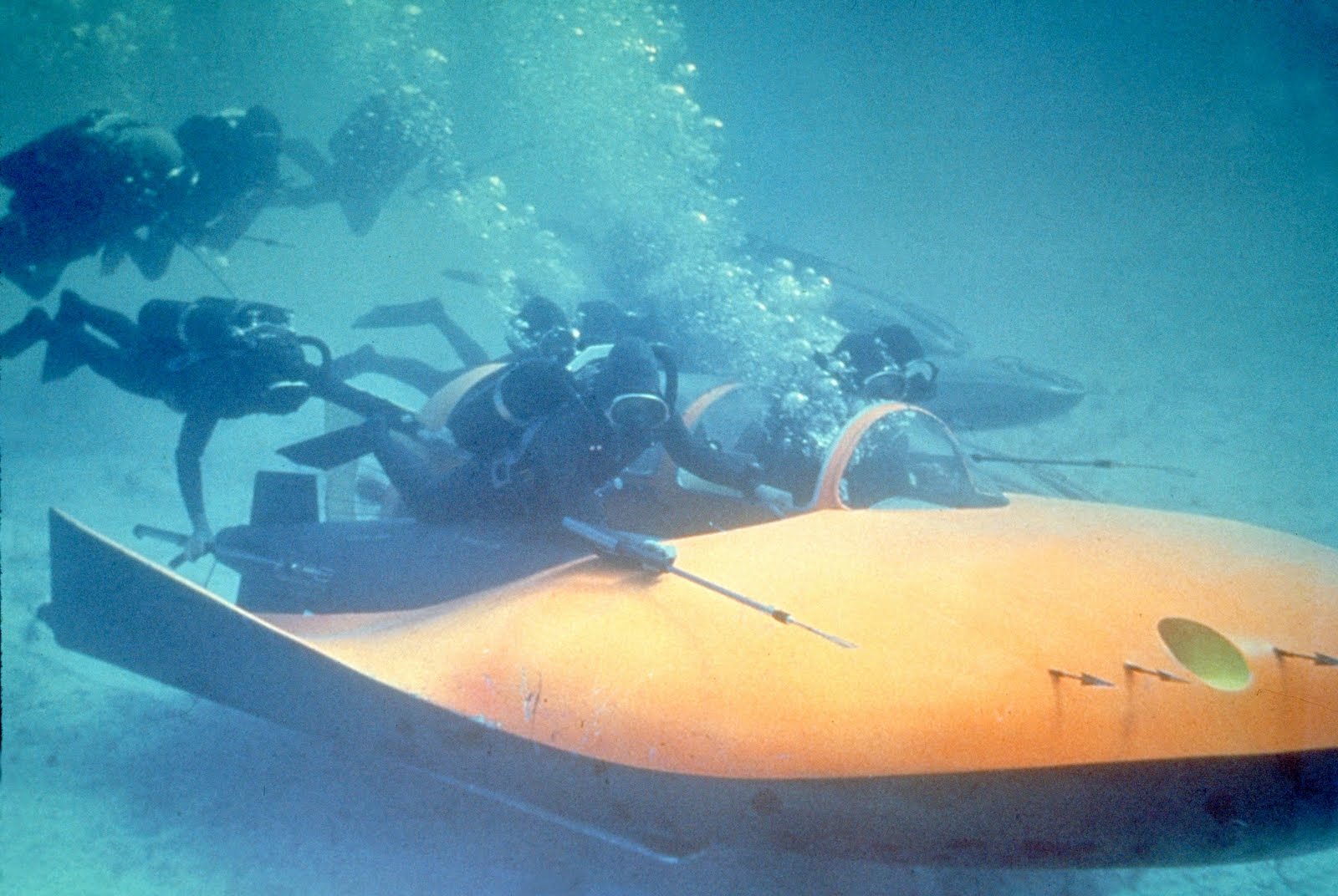
from Thunderball

from Russia


Domino, we need you
Are the Russians testing out a prototype mini-submarine known as the Triton NN?
A  prototype underwent government testing in 2008. It is meant to combine the qualities of a speed boat and a submersile and might have been issued to navy special forces in Kaliningrad.  Former Triton models were so-called wet submarines, s completely water-filled craft that was technically easier to produce and are not as sensitive to the depth charges as they can not be compressed.   Speculation runs that NS Concord is outside the archipelago to relay radio traffic. Mini submarines underwater is quite poor communication capabilities.


[October 19 Russian research vessel seems headed for Russian sub]


 It was likely that a foreign power was undertaking “underwater activities” around the islands off the coast of Sweden’s capital city. a Russian research vessel equipped for underwater search operations was heading for Swedish waters. The ship, the Professor Logachev, has a stated destination of Las Palmas, but is currently in the Baltic to the south-west of Hangö in Finland. 

[earlier Liberian-flag NS Concord patrolling near damaged russian submarine ]

Sub? what sub?


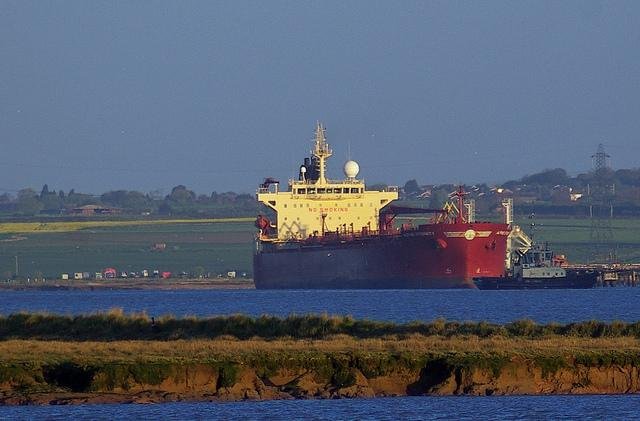
NS Concord

Svenska Dagbladet claims
A distress signal in Russian preceded the submarine alert in the archipelago of Stockholm. When the military search operation started radio communication between a transmitter in the archipelago and a transmitter in Kaliningrad was detected. This indicates that there could be a damaged russian submarine in Swedish waters.

The Svenska Dagbladet daily reported that the Swedes had picked up an emergency message suggesting a Russian mini-submarine had run into trouble in Swedish waters and could be damaged.

But Russia’s Defense Ministry said Russian submarines and ships have been “fulfilling their tasks in the world’s oceans,” according to plan, Russian news agencies reported.

“There have been no emergencies or accidents with Russian military vessels,” an unnamed spokesman at the ministry was quoted as saying.

Anders Nordin from the Swedish Maritime Administration said a Russian-owned oil tanker, NS Concord, which had reportedly been circling near Swedish waters for days, started sailing in a northeasterly direction toward Russia on Sunday morning. But it suddenly turned around and headed back in the direction of Sweden, accordin g to Marine Traffic, a website which monitors vessels in the Baltic Sea.
Media reports said the movements of the Liberian-flagged tanker might be connected to the submarine search.

NS CONCORD
Crude Oil Tanker
IMO: 9299692
MMSI: 636012382
Call Sign: A8FD7
Flag: Liberia (LR)
AIS Type: Tanker
Gross Tonnage: 57248
Deadweight: 105902 t
Length × Breadth: 244m × 42.03m
Year Built: 2005
Status: Active


Flag: Liberia Signal Letters: A8FD7
Port: MONROVIA

Owner: Wyatt Marine Co GT (ITC 69): 57,248
(140058)   (LRF / Company identification no: 5210645) NT (ITC 69): 32,797
Manager: SCF Novoship Technical Management DWT: 109,919
(10133063)   (LRF / Company identification no: 5736481)
DocHolder: SCF Novoship Technical Management
(10133063)   (LRF / Company identification no: 5736481)
SCF Novoship Technical Management is the SCF Group`s new fleet technical manager. The company provides services to third-party ship-owners as well.

OAO Novoship owns one hundred percent of the new organisation’s authorised capital stock. OOO SCF Novoship Technical Management carries on the traditions of Novorossiysk Shipping Company in the field of high quality fleet management.

In December 2012, OAO Novoship`s board of directors took the decision to create a separate technical manager with the aim of unifying SCF Group activities and bringing Novoship’s company structure into line with SCF universal standards.

OOO SCF Novoship Technical Management employs 81 staff recruited from OAO Novoship`s former fleet management department. OAO Novoship remains in charge of crewing and all administrative functions, including both legal and accounting services.

On 1 July, 2013, OOO SCF Novoship Technical Management commenced operations in Novorossiysk, Russia.
    -  Today Novoship Group owns and operates 48 modern vessels aggregating more than 4.5 million deadweight tons.
     -  Novoship has one of the youngest fleets in the industry – the vessels are 8 years old on average.
     -  OOO SCF Novoship Technical Management operates the fleet of Novoship and a number of third-party vessels.
     -  The Company`s priorities include development of the Russian shipping industry, maintaining high safety standards, employing highly professional staff, and maximizing shareholders` value.
     -  Novoship is a major taxpayer both in Krasnodar region and the Russian Federation.
     -  Novoship Group employs nearly 4,000 seafarers and shore-based personnel.
     -  14 Russian subsidiaries are involved in marine and onshore businesses throughout the south of Russia.